Nakamura’s throat cancer
The Narrow Road to the Deep NorthTenji Nakamura’s throat cancer interrupts a life organized around work and advancement, then reshapes it through treatment, dependence, and care. The illness first appears as something he can set aside; it becomes impossible to ignore only as symptoms worsen. Its consequences extend beyond his physical condition: the experience makes him recognize Ikuko Nakamura’s devotion and changes how he treats the people around him.
Onset and diagnosis
For several weeks, Tenji Nakamura’s voice is unusually hoarse. After attending a lengthy interview for a deputy accounts manager position, he rubs his stiff neck and notices a swelling. He pays it little attention. His personnel-department work is busier than ever, and he is being considered for a senior manager’s role; acknowledging illness would interfere with the future he is pursuing.
The symptoms nevertheless progress. His throat becomes sorer, and swallowing food grows painful. He reduces his eating, relying mainly on miso soup. He seeks medical attention only after he begins coughing up blood. The diagnosis is unequivocal: throat cancer. The sequence makes his initial disregard consequential. What he had treated as a minor concern becomes a serious illness that can no longer be subordinated to work.
Treatment and its lasting effects
The first operation removes the tumour, but it does not restore Nakamura’s former condition. His speaking voice is affected, becoming thin and reedy. He accepts this change with composure, understanding himself as a survivor and taking comfort in having come through surgery. The altered voice is not a passing inconvenience: it remains a visible consequence of treatment and part of the way he understands his survival.
Three months later, Nakamura feels another small swelling in his neck. At first he tries to put it out of mind, as he had when the earlier swelling appeared. The bump grows, leading to further surgery and radiotherapy. This treatment leaves him feeble and aged beyond his years. His saliva glands are damaged, and he can swallow only wet food, and even that with difficulty. The cancer’s course is therefore marked not by a single operation and recovery but by recurrence, additional treatment, and an enduring restriction on eating and speaking.
Ikuko’s care and daily life
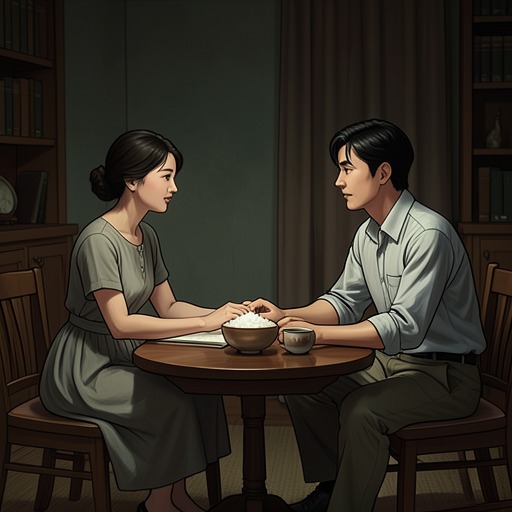
During this period, Ikuko Nakamura devotes herself to caring for her husband. Each morning she rises two hours early before work to attend to his needs. Nakamura admires her practical nature, but what matters most to him is her presence and touch. He longs for her to sit beside him and gently run the backs of her fingers down his face. What she regards as doing nothing becomes, for him, the most important part of his life: in those moments, fear recedes and pain becomes briefly more bearable.
Her care also changes what Nakamura notices. He recognizes her steady pleasantness and the goodness expressed in her daily attention, qualities he had not properly appreciated before becoming ill. The cancer thus alters the balance of their relationship: the man once absorbed in professional advancement is now dependent on his wife’s care, and that dependence enables him to recognize the value of a closeness he had previously overlooked.
Change in character and significance
Nakamura’s response to cancer comes to include more than endurance. As he recovers some strength, he makes time for people who are sicker than he is and works with a charity delivering meals to older people. He becomes kinder and more thoughtful toward family, friends, neighbours, and strangers. He is surprised to discover this goodness in himself, and that recognition brings comfort and tranquillity in the face of his illness.
The illness does not simply resolve into a return to health: its treatments leave him physically weakened and with lasting difficulties, while the account emphasizes the care and ethical change that develop alongside those limitations. Cancer brings Nakamura’s ambition and self-reliance into contact with dependence, and his survival is measured not only by having endured treatment but by the attention he learns to give others. The diagnosis marks a turning point in how he understands both Ikuko’s devotion and his own capacity for kindness.